

Natural Process (dry)
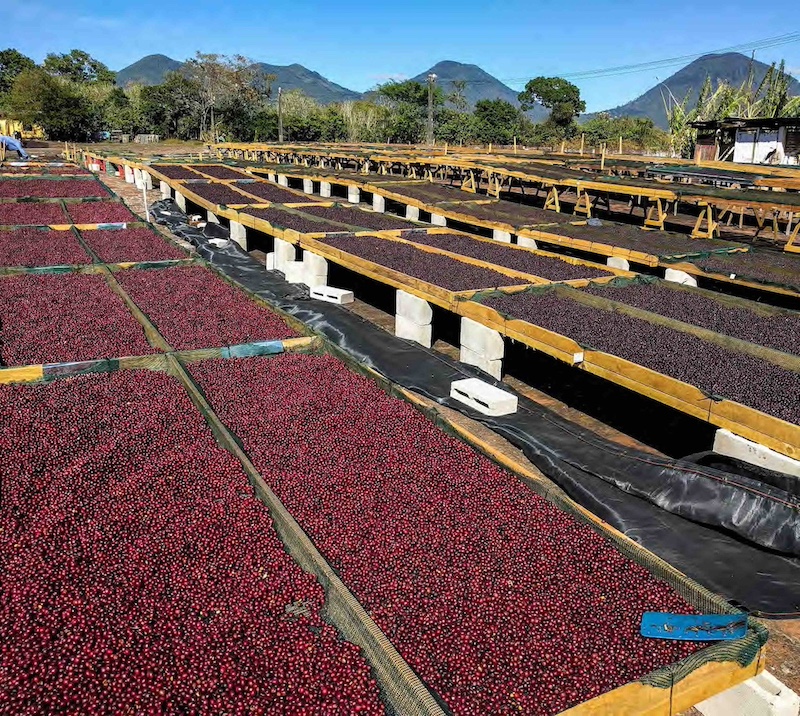
We begin our exploration of coffee processing methods with the Natural (or Dry) process and with good reason. As the oldest method, predating all others by centuries, it reflects the most direct relationship between the coffee cherry and the bean. Understanding this traditional approach provides an essential foundation for exploring how later methods – Washed and Honey evolved as deliberate refinements of the original, patient process.
Nothing is removed. The whole cherry – skin, fruit, mucilage and all is laid out to dry around the bean. This can take up to 30 days, during which the fruit slowly surrenders its sugars and complexity to the bean within.
Because the intact fruit provides a long-lasting fuel source for yeasts and bacteria, fermentation here is prolonged and beautifully complex. Producers manage it carefully controlling sun exposure, drying depth, and how often the coffee is turned.
The result? Intensely fruity, wine-like, full-bodied coffee with extraordinary depth.
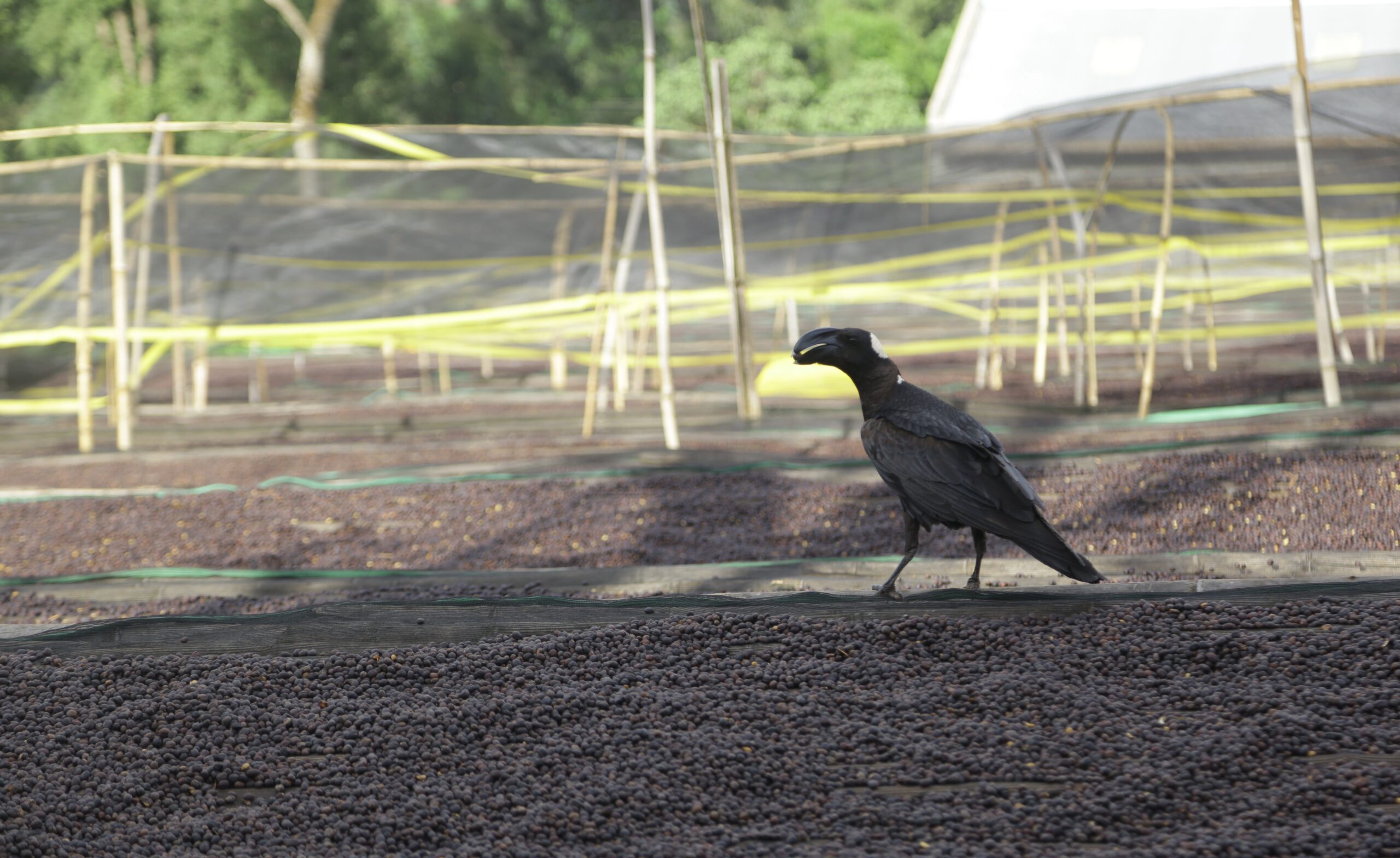
Most common in Ethiopia, Yemen, Brazil, and Costa Rica, the Natural Process demands significantly more space, labor, and attention than Washed methods and carries a higher risk of spoilage or over-fermentation.
One important distinction: unlike Washed coffees, Naturals cannot be dried mechanically. They must dry on patios, raised beds, or drying tables. You may see them labeled ‘Sun-Dried,’ though ‘Natural’ is the preferred term many processing methods use sun drying too.
+ There are no comments
Add yours